

QRHUB Takes Over Dubai’s OOH Scene With an All-in-One QR Code Platform Campaign

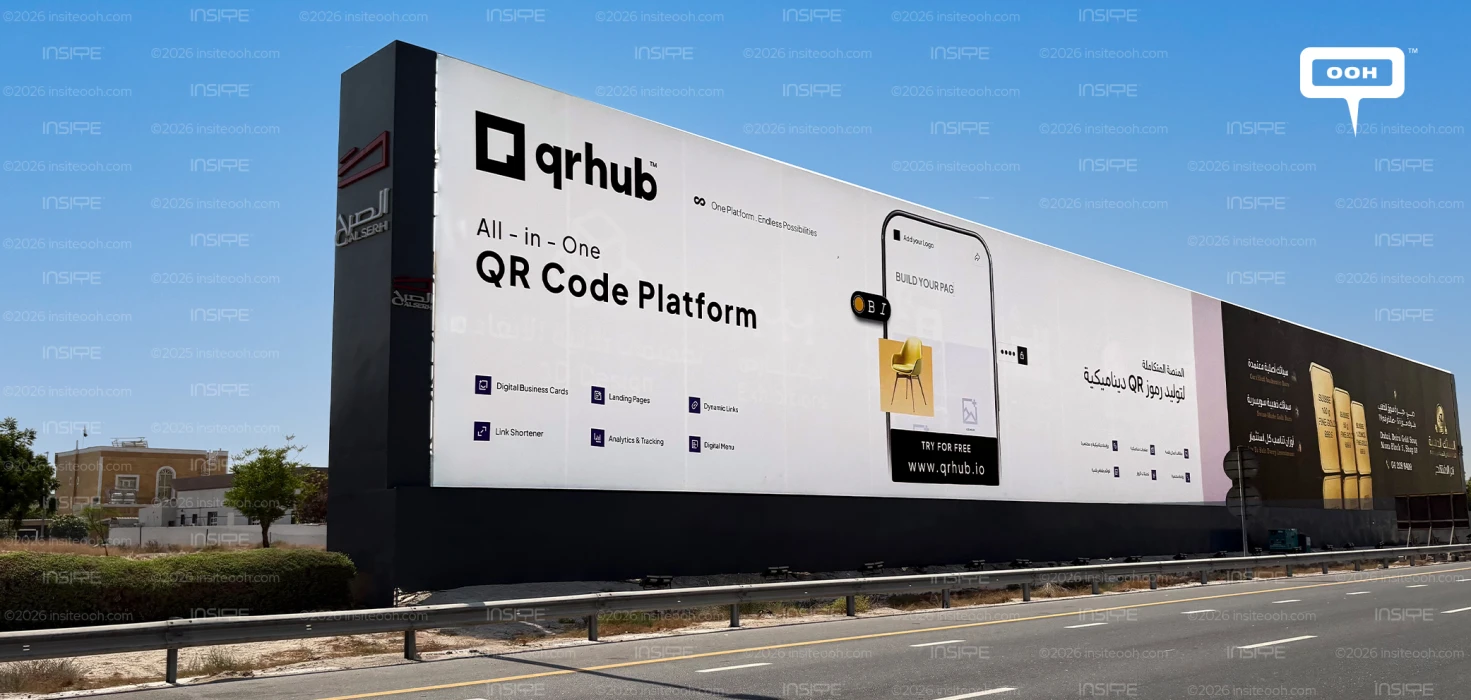
QRHUB, by Meno SaaS Ecosystem, has taken its business software proposition onto Dubai’s roads with a hoarding campaign launched in the fourth week of September. Led by “All-in-One QR Code Platform,” the outdoor advertisement introduces tools for creating digital business cards, landing pages, menus and trackable links.
The campaign gives a digital service a substantial physical presence, placing QRHUB’s name and capabilities in front of passing audiences. Its message centres on a practical business need: managing the information customers reach through a QR code and understanding how they interact with it.
Bringing Business Software Into the Roadside Conversation
The hoarding introduces QRHUB through its product category, giving viewers an immediate explanation of what the brand offers. That clarity matters for a software platform whose name may be unfamiliar to someone encountering it during an everyday journey.
“All-in-One” then expands the proposition. The supporting features include digital business cards, landing pages, dynamic links, link shortening, analytics and tracking, and digital menus. Together, they position QRHUB around several business tasks, giving professionals different reasons to investigate the same platform.
This gives outdoor advertising a useful role in the campaign. A restaurant operator may recognise the menu application, while a sales professional may be interested in contact sharing. The hoarding introduces those possibilities without requiring an audience to be actively searching for QR software.
A Product Demonstration Sized for Outdoor Advertising
An oversized smartphone illustration occupies the central section, showing a page under construction with a product image and editing elements. It gives the software a visible output: a digital page that a business can create and share.
The visual supports QRHUB’s stated workflow. Its website describes a page builder that accepts content such as text, images, videos, links and contact cards, followed by customisation and publication through a dynamic QR code and shareable link.
The hoarding organises this proposition at different reading levels. Large branding and the main headline introduce the service, while smaller feature labels add detail for viewers with more time to read. The white background, black lettering and limited purple accents keep those elements visually connected.
English and Arabic messaging extend the introduction across both languages. The Arabic section highlights dynamic QR code generation, reinforcing the product category within the same outdoor execution.
Turning Awareness Into a Product Trial
“Try for Free” and www.qrhub.io sit within the smartphone illustration, linking the demonstrated product to a clear next step. The invitation gives interested audiences a way to assess the platform through use.
The website address also suits the campaign’s roadside setting. It provides a destination viewers can return to after the initial encounter, allowing the hoarding to introduce the service while the website handles exploration and registration.
There is a direct relationship between the product and its advertising medium. QRHUB helps businesses connect physical materials with digital content. Its Dubai campaign brings that proposition into a physical advertising environment, using outdoor visibility to introduce the business behind those connections.
A practical capability gives the proposition further substance: QRHUB’s Dynamic Links allow businesses to change a QR code’s destination URL without reprinting the code. For menus, promotional materials and other printed customer touchpoints, that means the destination can evolve while the original material remains in circulation.
Come on, tell us what you feel about this article.

.jpg)